How it Works
Two tracks run in parallel. The creative track teaches the production system your brand identity. The technical track connects it to your systems. Neither waits for the other.
Overview
From brand book to catalogue
Stage 1
Brand book
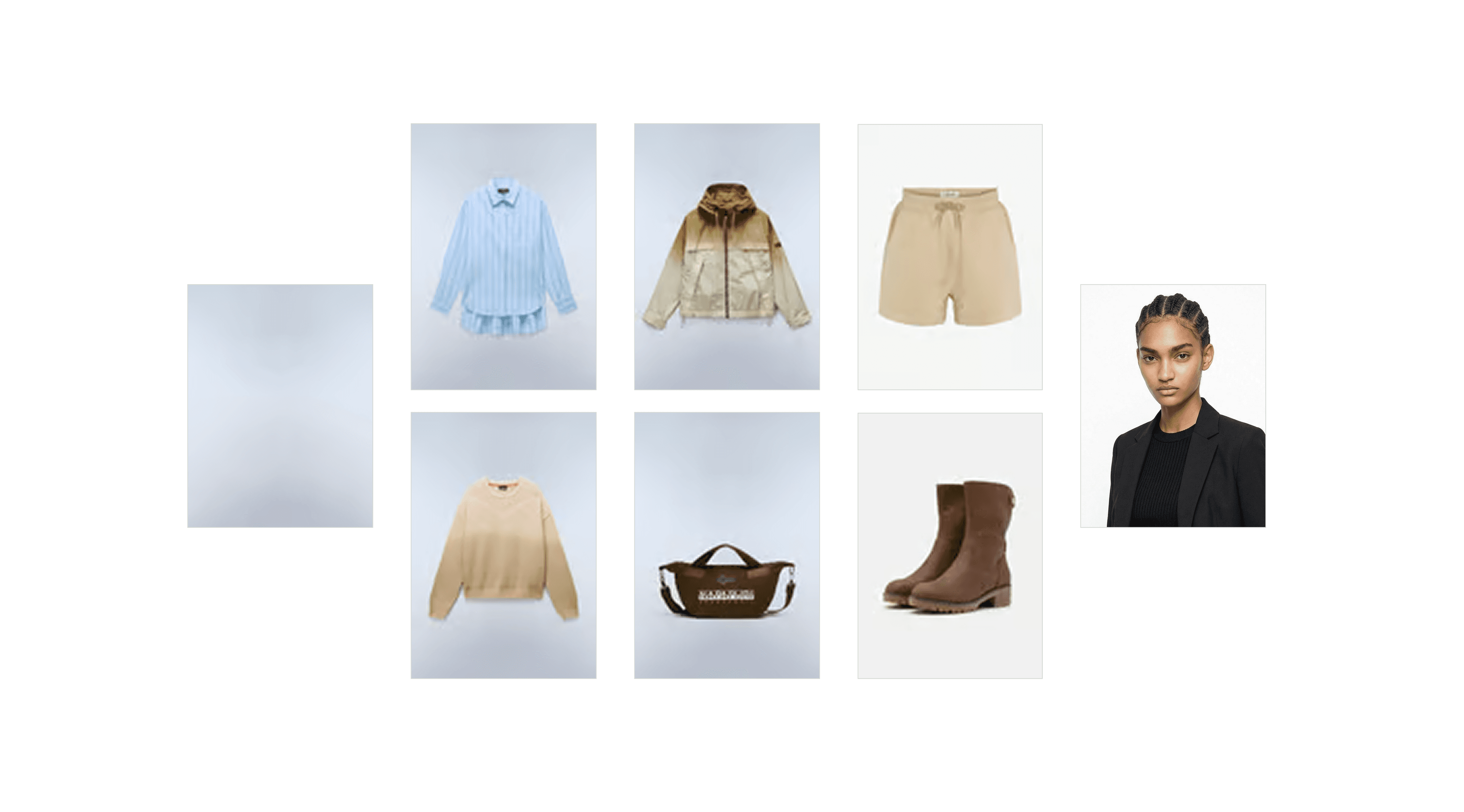
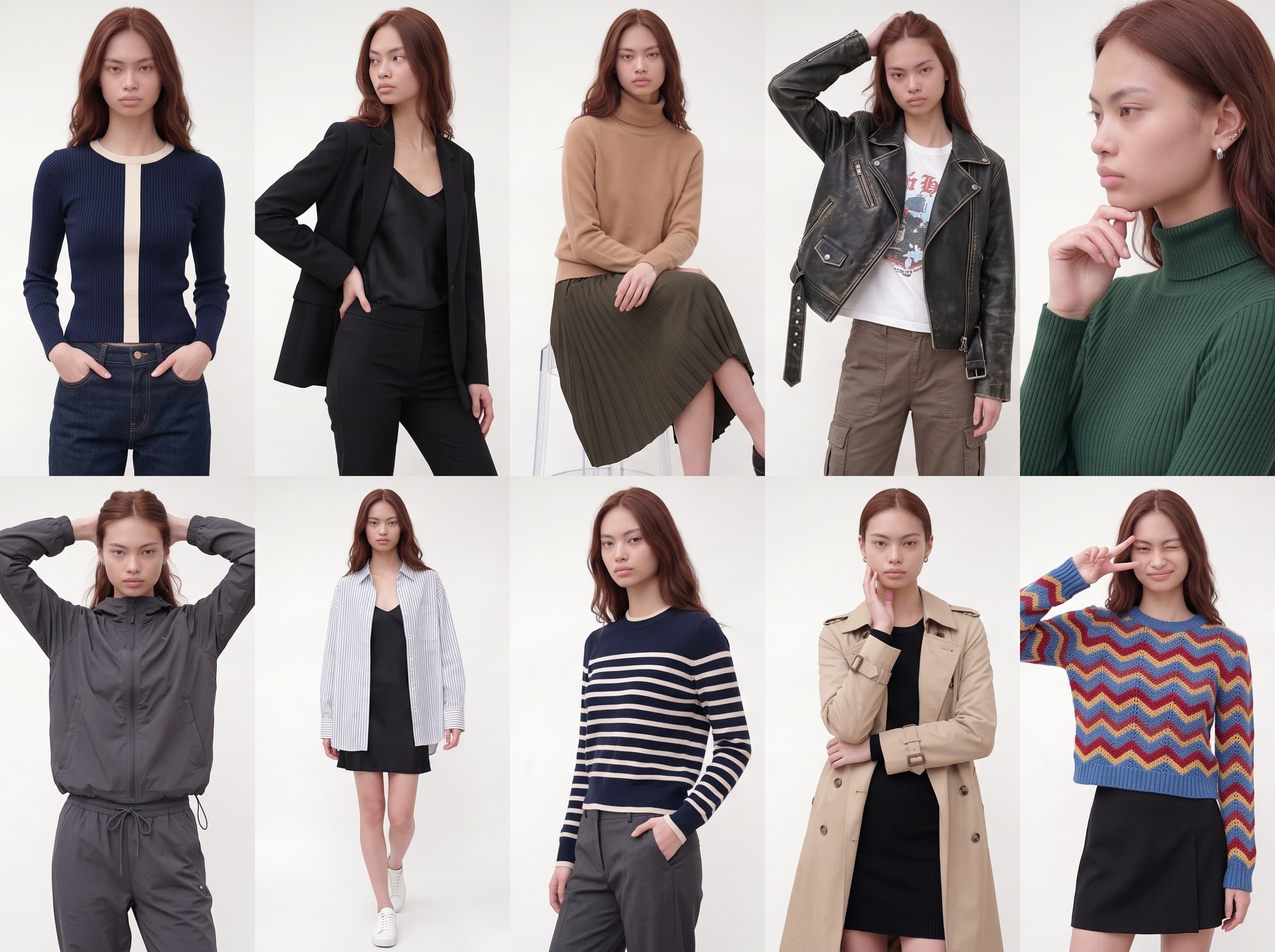
Your existing guidelines go in: posing, styling, lighting, casting, framing. If the guidelines live in a deck, the deck is the input. If they live in past shootings, the shootings are the input. Nothing needs writing from scratch, and nothing about how your brand looks is decided by us.
In parallel: workspaces created, roles and permissions set for your team.
Stage 2
Channel guidelines and connection
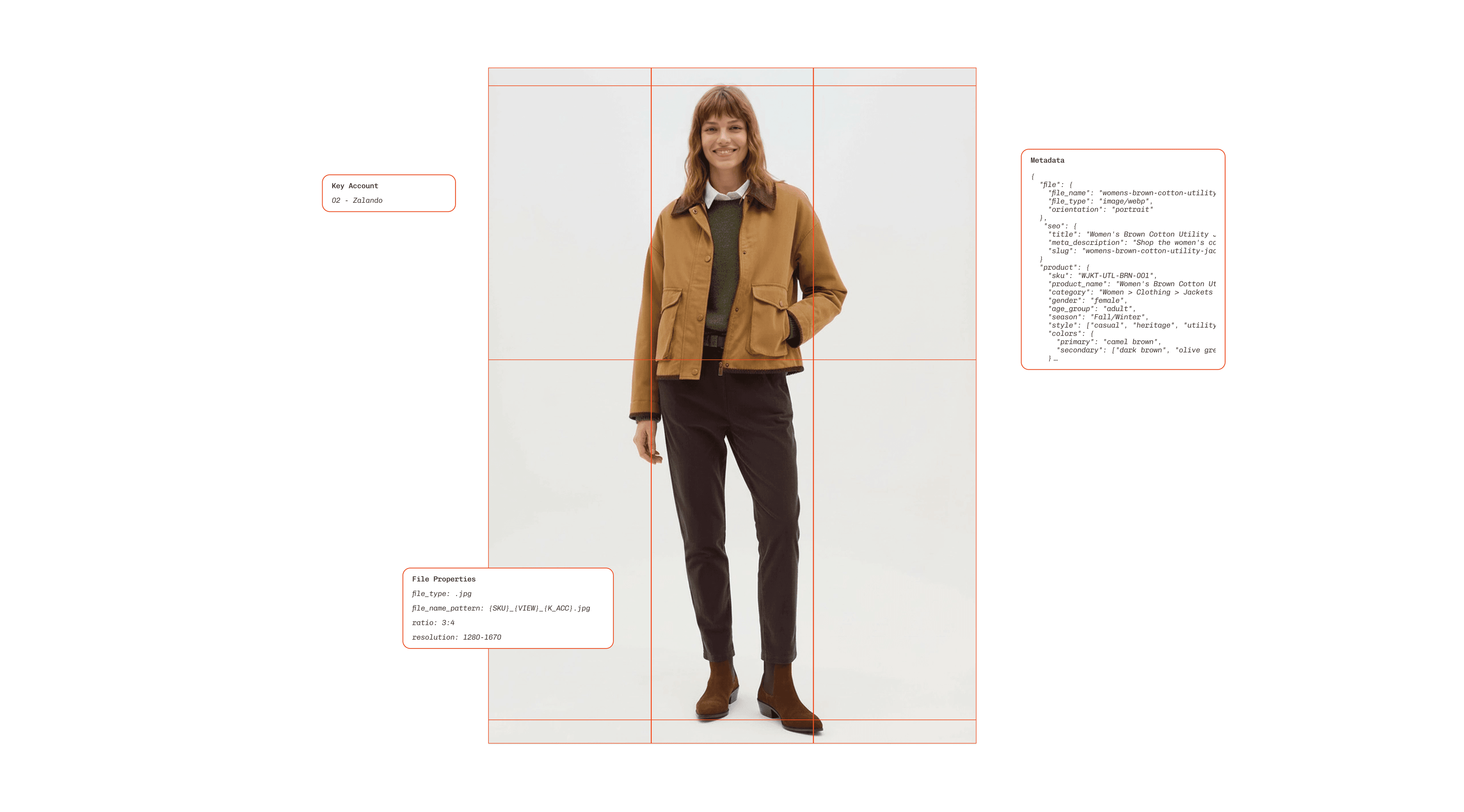
Per channel and per product category: how many shots, in what order, at what crop, on what background, at what resolution, with what naming convention and metadata. Configured once, applied to every export afterwards.
A brand running ecommerce, wholesale and three marketplaces has five sets of rules. Each is configured once and never thought about again.
In parallel: connection to your systems, and a first integration test end to end.
Stage 3
Test shooting
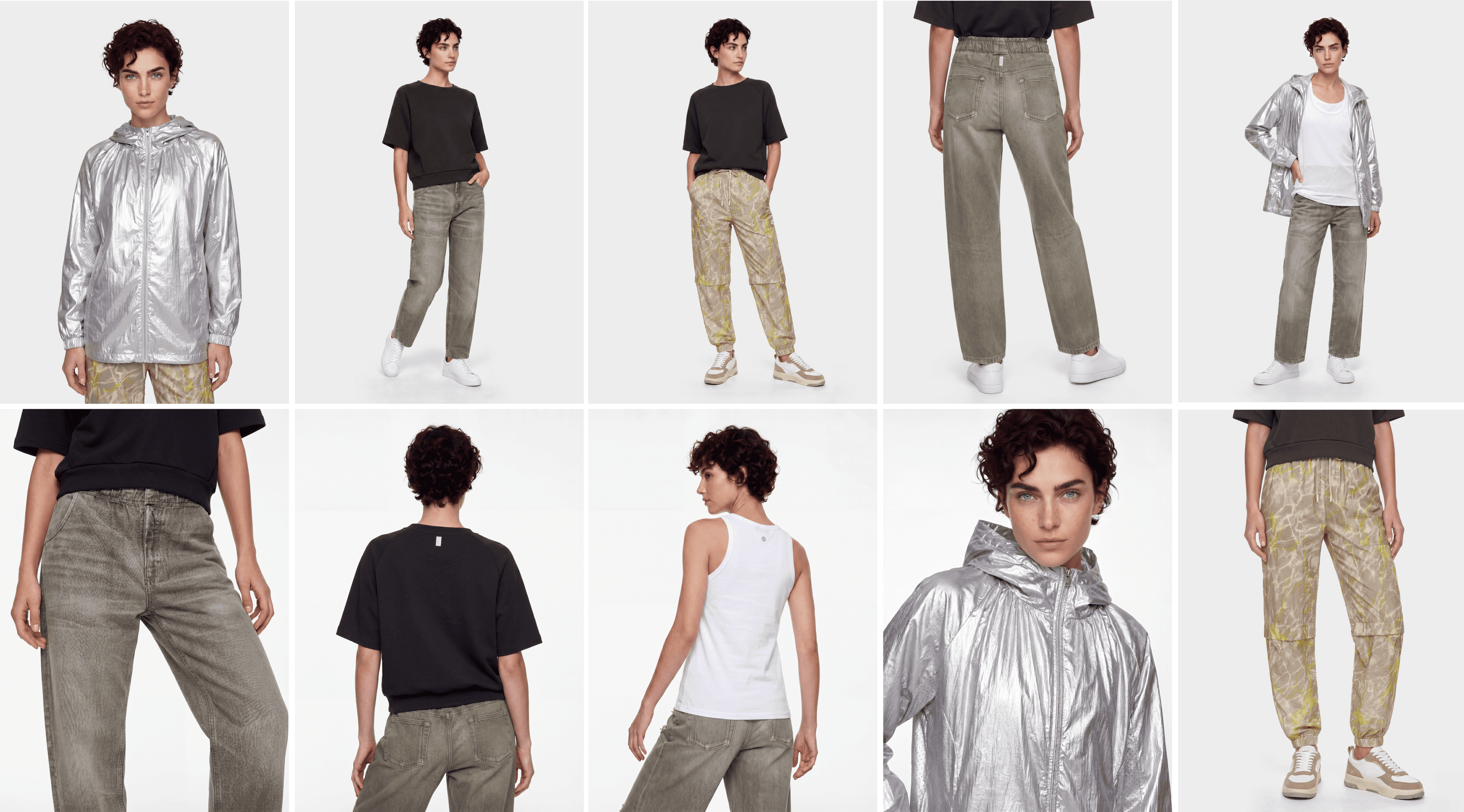
Ten looks. Real products, final models, final guidelines. This is where your creative team says yes or tells us what is wrong, and where the brand book gets its last corrections. Nothing scales until this is signed off.
Stage 4
Production
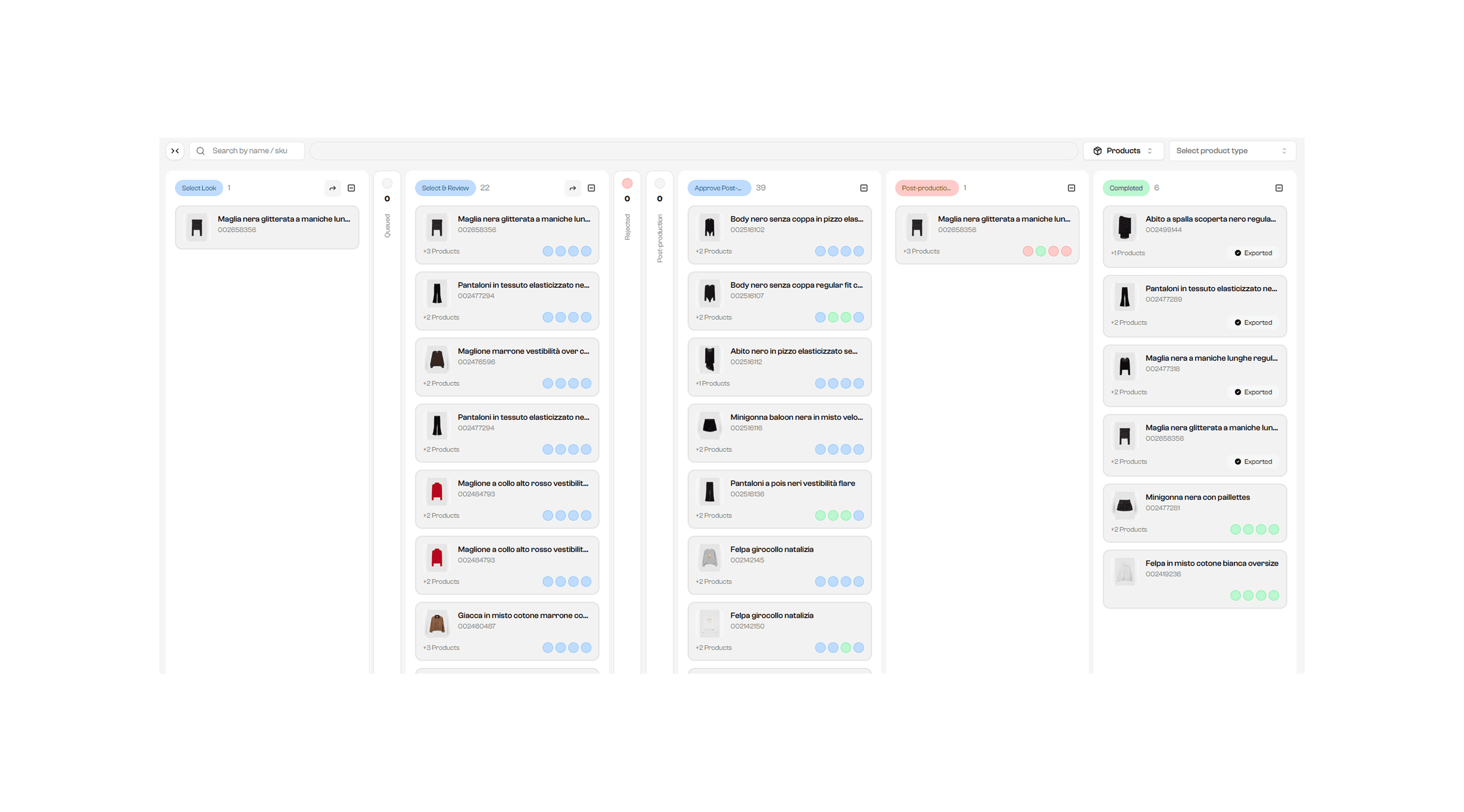
Products flow in, shots come back, your team approves inside the studio, approved files land in your systems in your naming convention.
Every correction your team makes is learned, so the proportion of shots needing intervention falls drop after drop while the identity holds.
If you want your own model
The creation track runs alongside all of this. A complete brief returns ten candidate models within one working day.
After launch
A named account contact. KPIs tracked per drop: approval cycle time, technical acceptance rate, manual corrections. Reviewed each quarter, with workflow changes made against the numbers rather than against opinions.
How we start
How we start
Nobody signs a production contract on a portfolio. Before any commitment, we produce your garments to your guidelines and put the result next to what you produce today.
That comparison is the decision. Everything below exists to make it a fair one.
What we ask you for
What you produce today. Volumes per season, cost per SKU, how long it takes from garment arriving to image live, and what you have committed to internally on turnaround. Not to benchmark against, but because a production system that does not fit your calendar is not useful whatever it costs.
Your guidelines. Posing, styling, lighting, casting, framing. If they live in a deck, the deck is the input. If they live in past shootings rather than a document, the shootings are the input. Nothing needs writing from scratch.
Your file specifications. Resolution, crop, background, naming convention, metadata, per channel and per product category. A brand running ecommerce, wholesale and three marketplaces has five sets of rules.
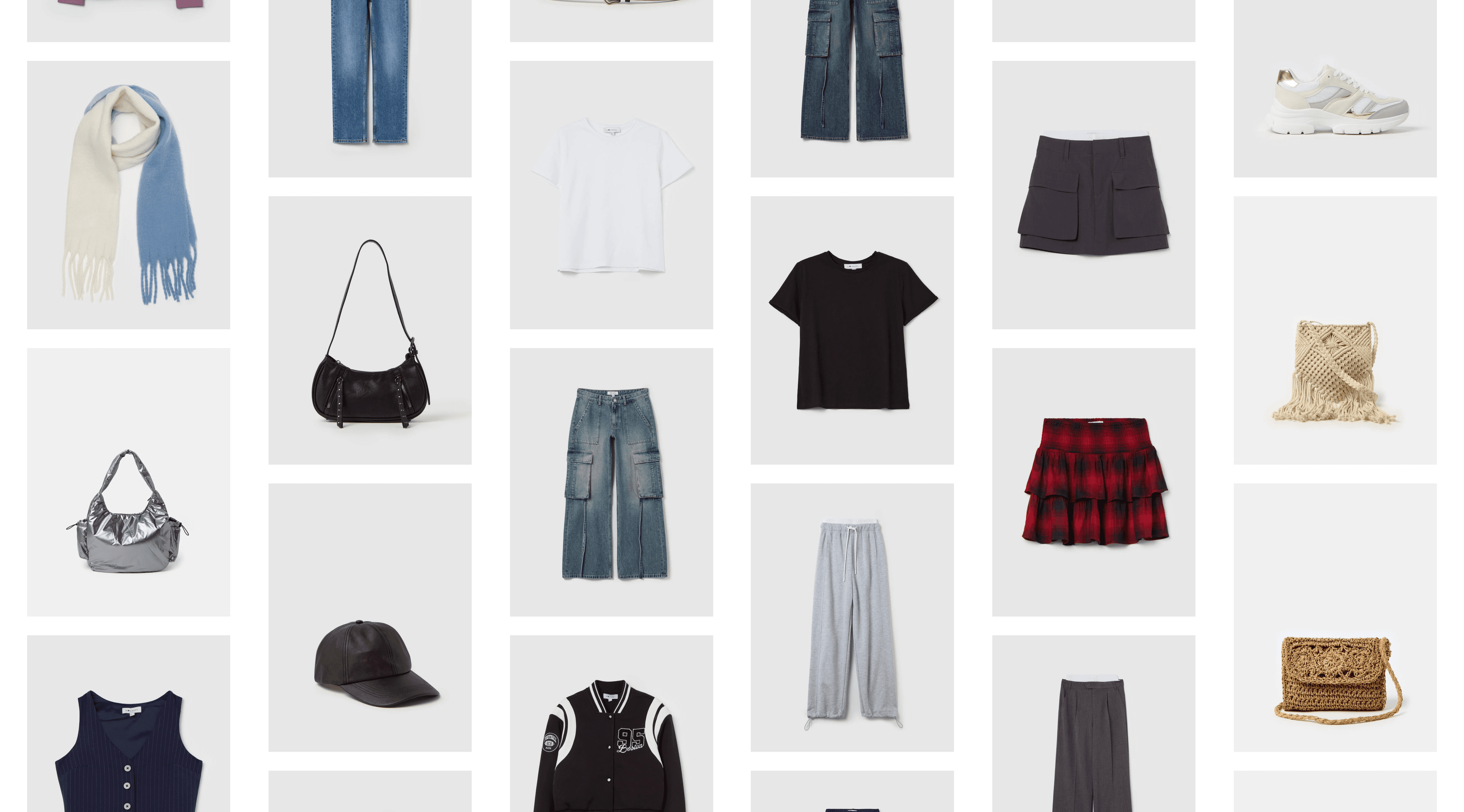
A representative sample of products. Not your best products. Your representative ones: the difficult fabrics, the colours that never photograph right, the categories your current production handles worst. Around a hundred SKUs is enough for us to configure against, and the exercise is worthless if you send only the easy ones.
What we do with it
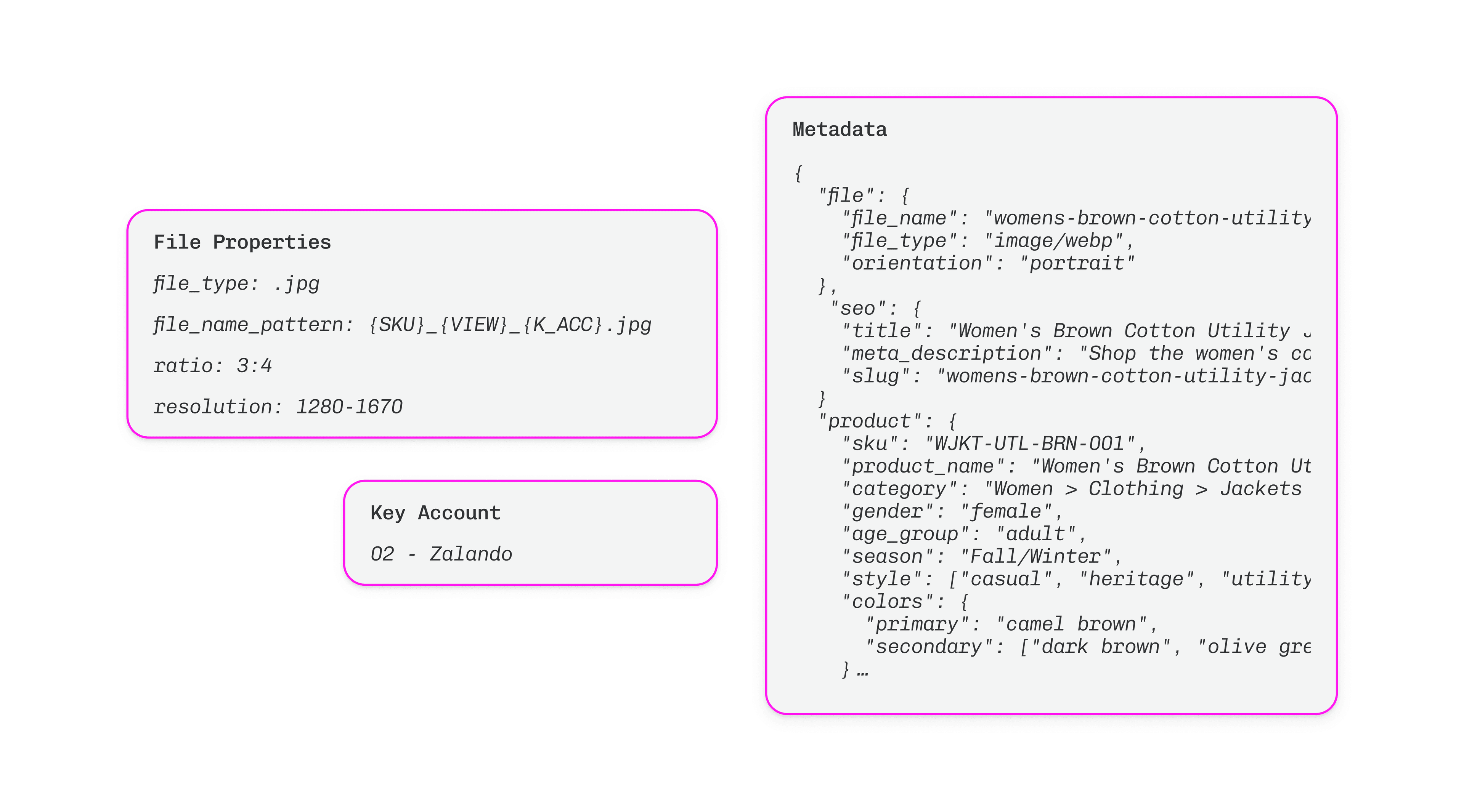
We configure the production system around your brand before producing anything. Your brand book stops being a document and becomes the rules the production runs on: your poses, your lighting, your crops, your shot list per category, your margins per channel.
This is the step that separates a managed studio from a tool. A tool would hand you an interface and let you approximate your guidelines yourself, generation by generation. Here the guidelines are configured once, by us, and applied to every image afterwards.
The test shooting
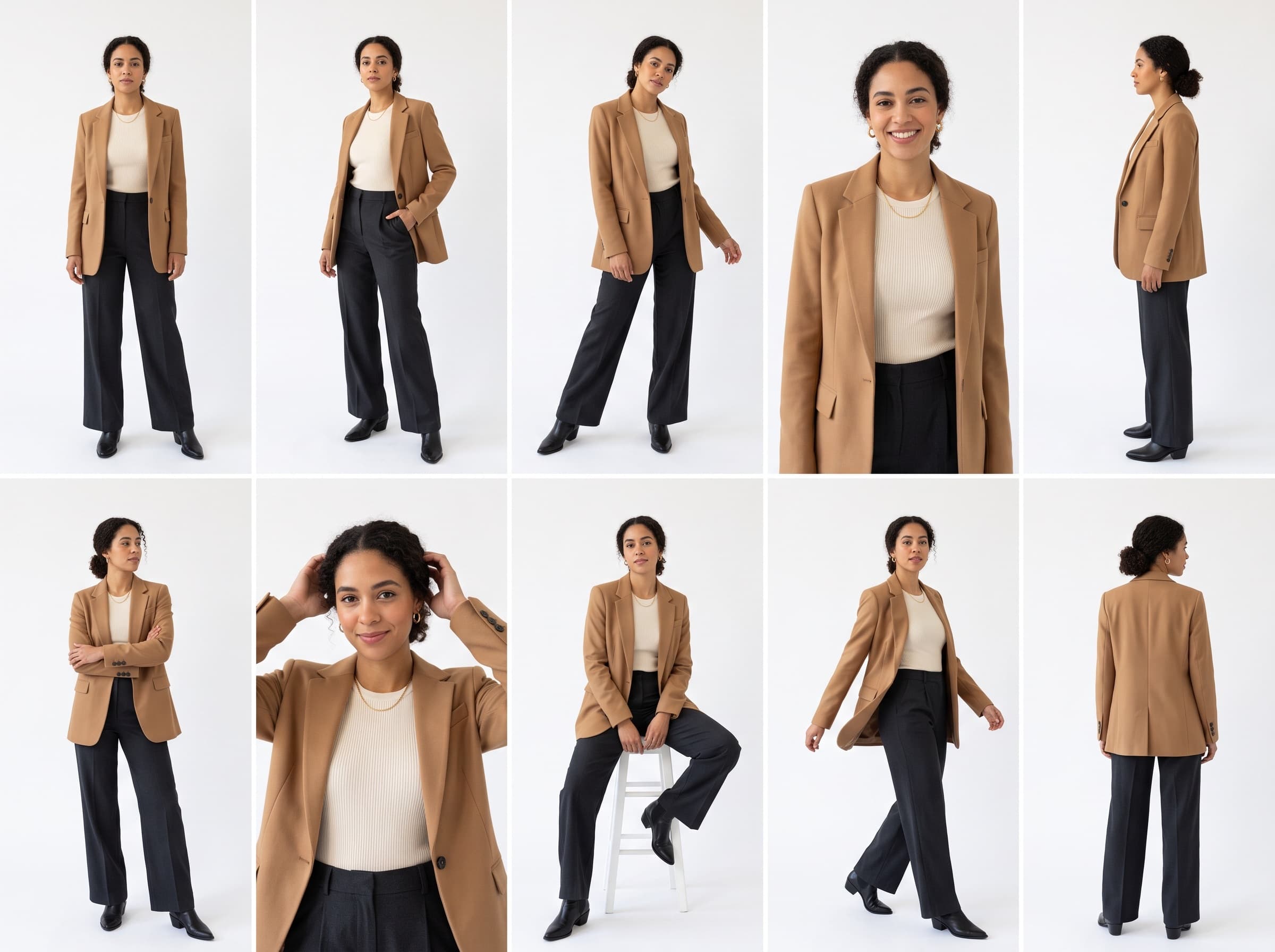
Then we produce, free, before any contract.
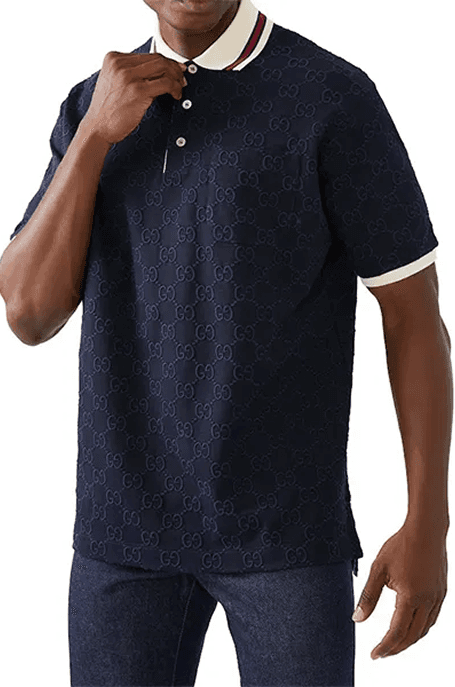
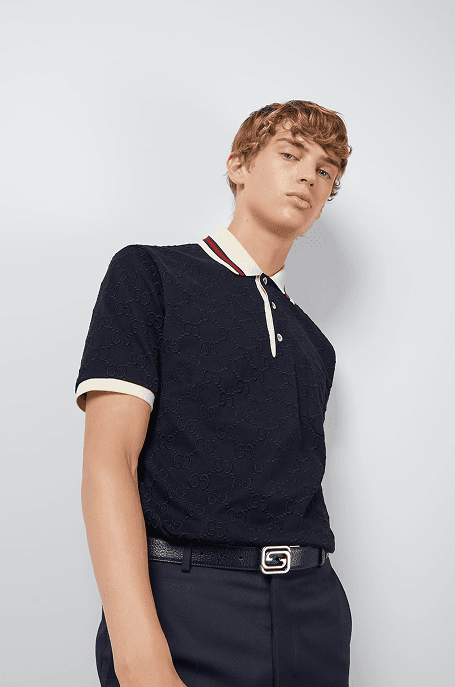
Real products, final models, final guidelines. Not a demo on somebody else's garments and not a sample from our portfolio. Your products, produced the way they would be produced in month six.
Your creative team either signs it off or tells us what is wrong, and the brand book takes its last corrections there. Nothing scales until that is approved.
We do not need your samples.The photographs you already have are enough: flat lays, hanger shots, ghost mannequins, 3D assets. No sample shipping, no logistics, no garments leaving your warehouse to sit in a studio for a fortnight. If you would rather send physical products we can work that way, but it is not a requirement and it is usually the slowest part of anyone else's process.
What you are judging
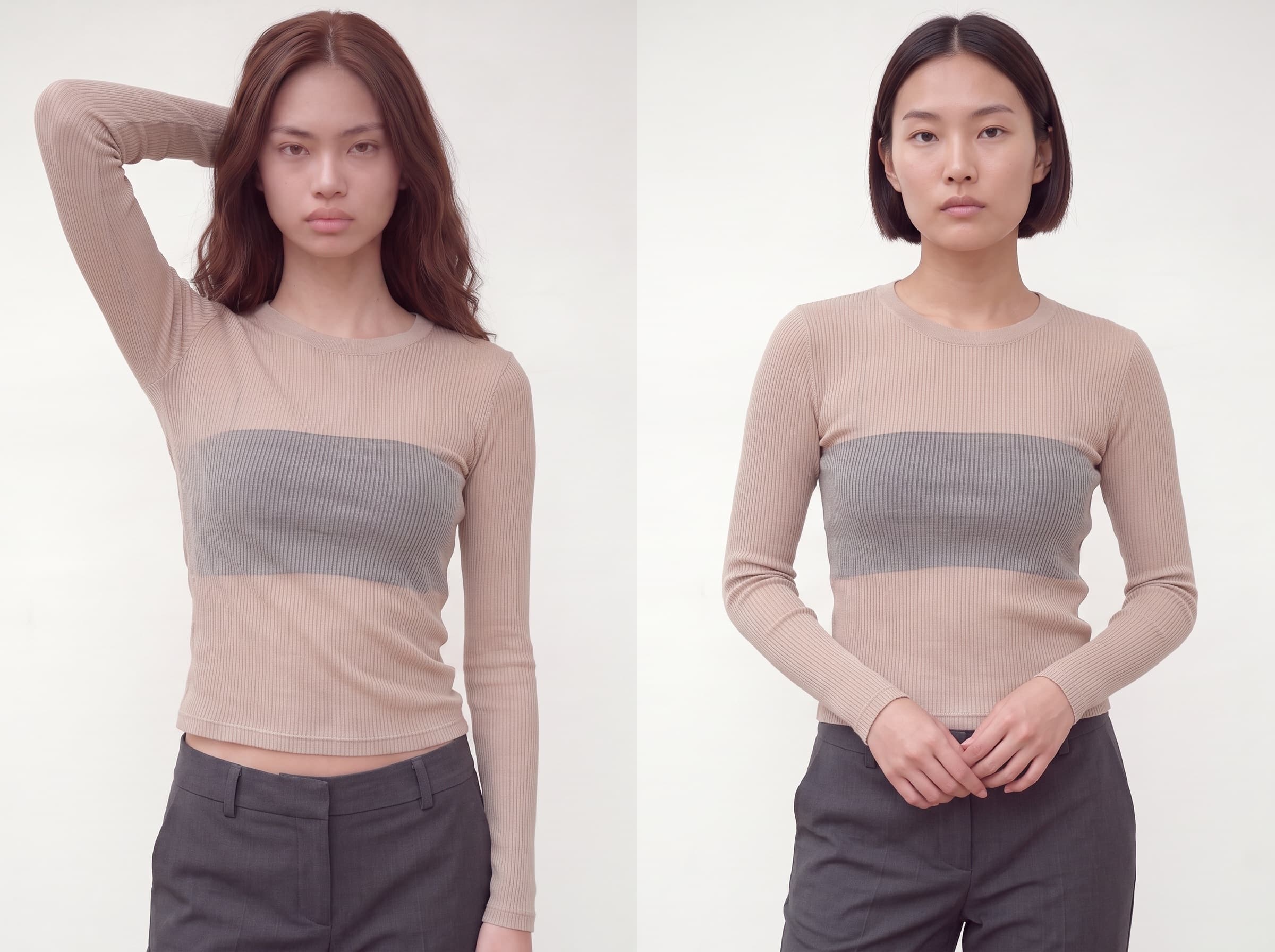
Put the test output next to your current production and look for the difference. If a member of your team can pick ours out of a line up on quality grounds, we have not finished configuring.
The harder test is the second one, and it is the one that matters more at catalogue scale: produce the same garment twice, weeks apart, and see whether the two match. That is where production built on people and calendars quietly fails, and it is the thing a single beautiful sample can never demonstrate.
What happens after you say yes
Your systems connect. An open API brings products in and delivers approved images back out, in your naming convention, at your resolutions, with your metadata. Where you would rather not build against our API, we build against yours. On our largest account we connect nightly and pull new products, so the queue loads without anyone moving a file.
Your team approves inside the studio. Products flow in, shots come back, approved files land in your systems.
The brand book compounds. Every correction your team makes is learned. On one lookbook client, 95% of shots were accepted without intervention by the second production, and by the fifth the creative director was approving nineteen shots in twenty exactly as delivered. What disappears is not control. It is the correcting, the rebriefing and the pulling of shots back towards the brand.
You get a named account contact and numbers per drop: approval cycle time, technical acceptance rate, manual corrections. Reviewed each quarter, with workflow changes made against the numbers rather than against opinions.
How a model is built
How a model is built
A Sartiq model does not begin with a face. It begins with a document.
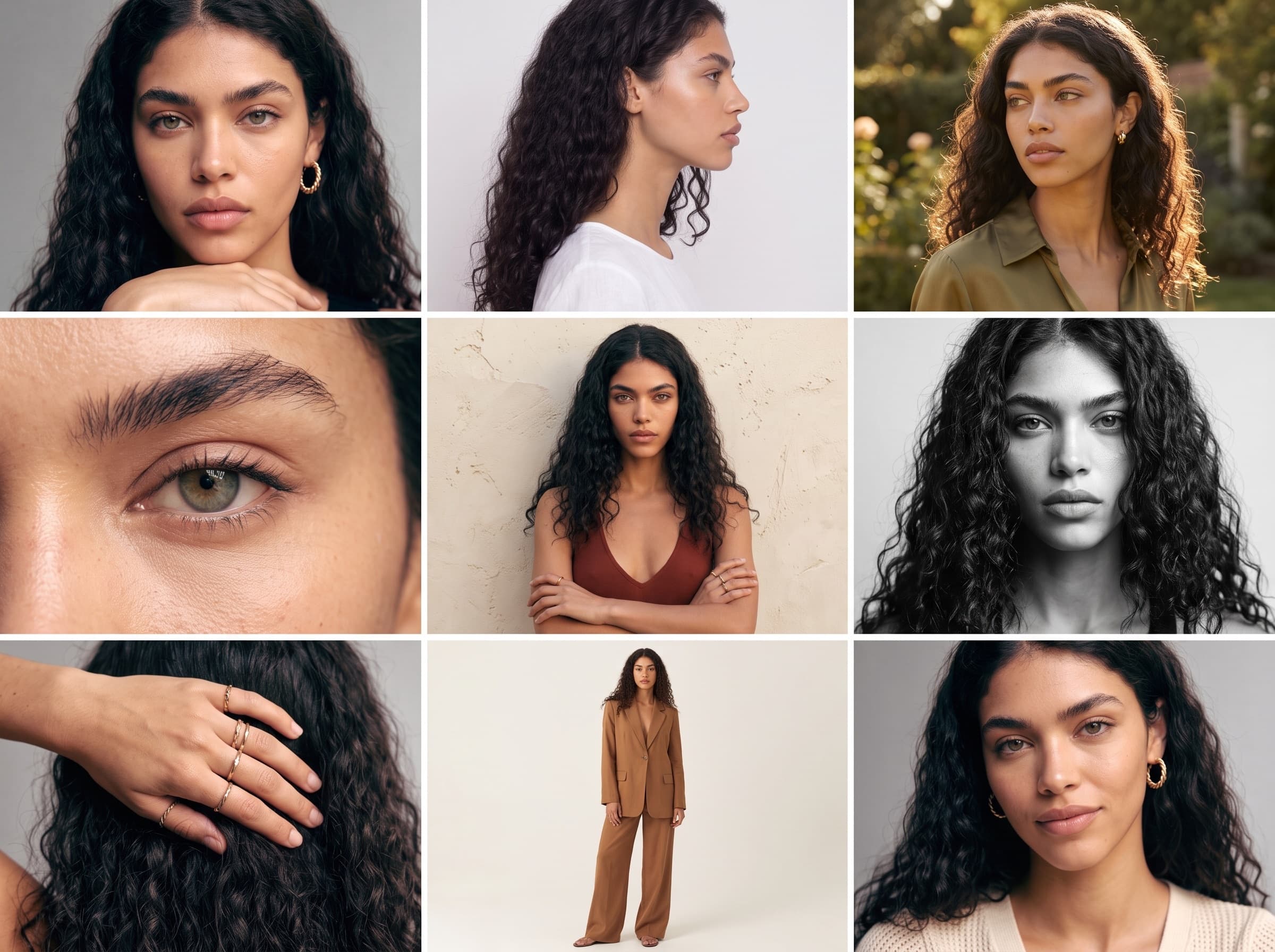
Only text crosses the wall
Your references are read by a person, not fed to a machine. The moodboards you send, the casting guidelines, the brand lines, the old campaign images: an operator studies all of it on screen and writes a description from it. That written description is the only thing that enters the generator. No reference image, no photograph, no likeness of any real person is ever uploaded, referenced or processed.
This is the rule the whole process is built on, and it is the reason the model that comes out belongs to nobody.
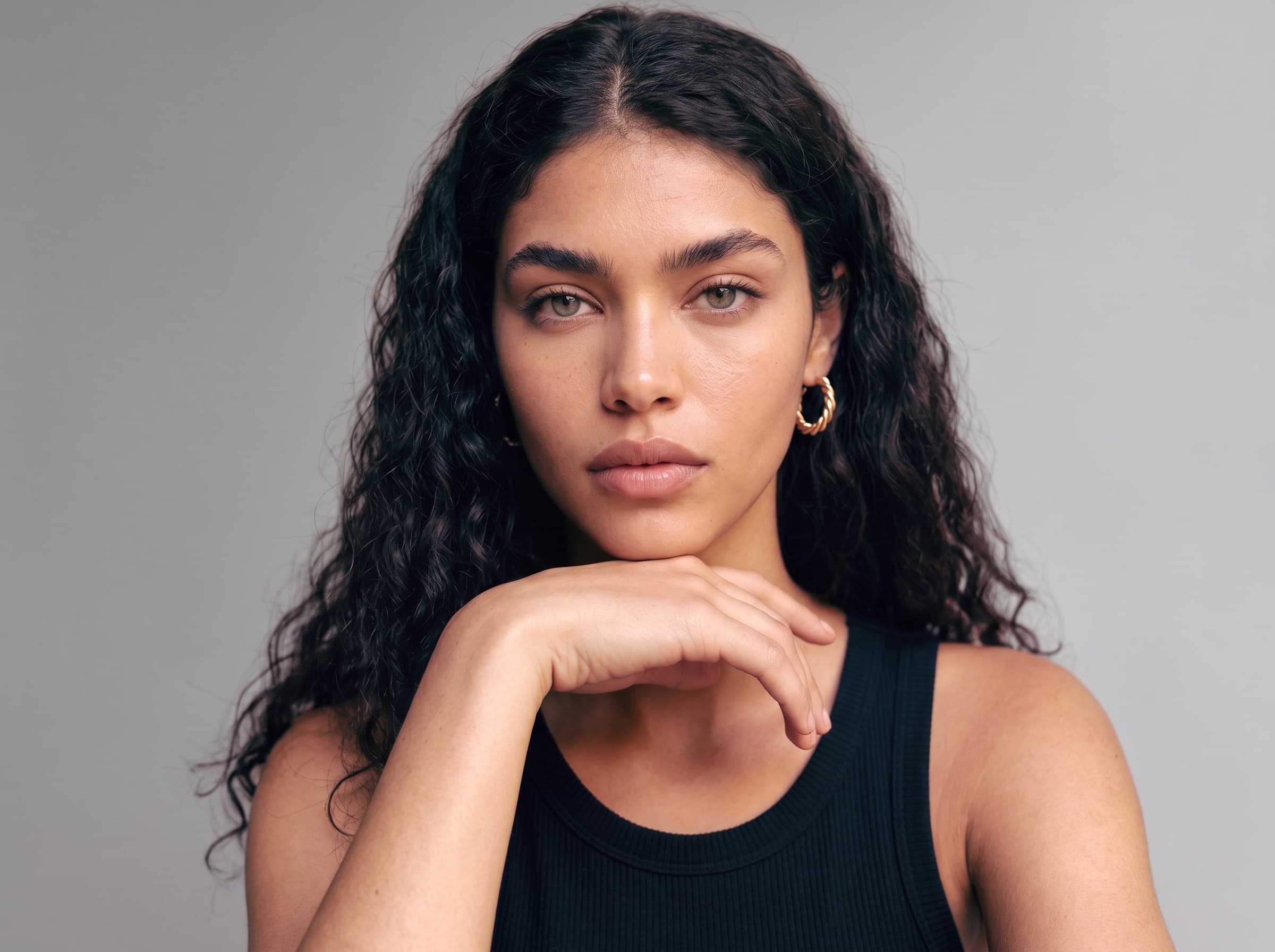
The trait brief is written by hand, in generic descriptors only
The operator writes in language a casting director would recognise and a lawyer would not object to: build, proportion, hair, skin tone, the quality of a jawline, the way a shoulder sits. Generic descriptors throughout. No names, no likeness references, no targeting of any individual.
If the brief cannot be written without naming someone, the brief does not get written. That constraint is not a limitation on the work, it is the work. A description precise enough to produce a specific face, and general enough that the face is not anybody's.
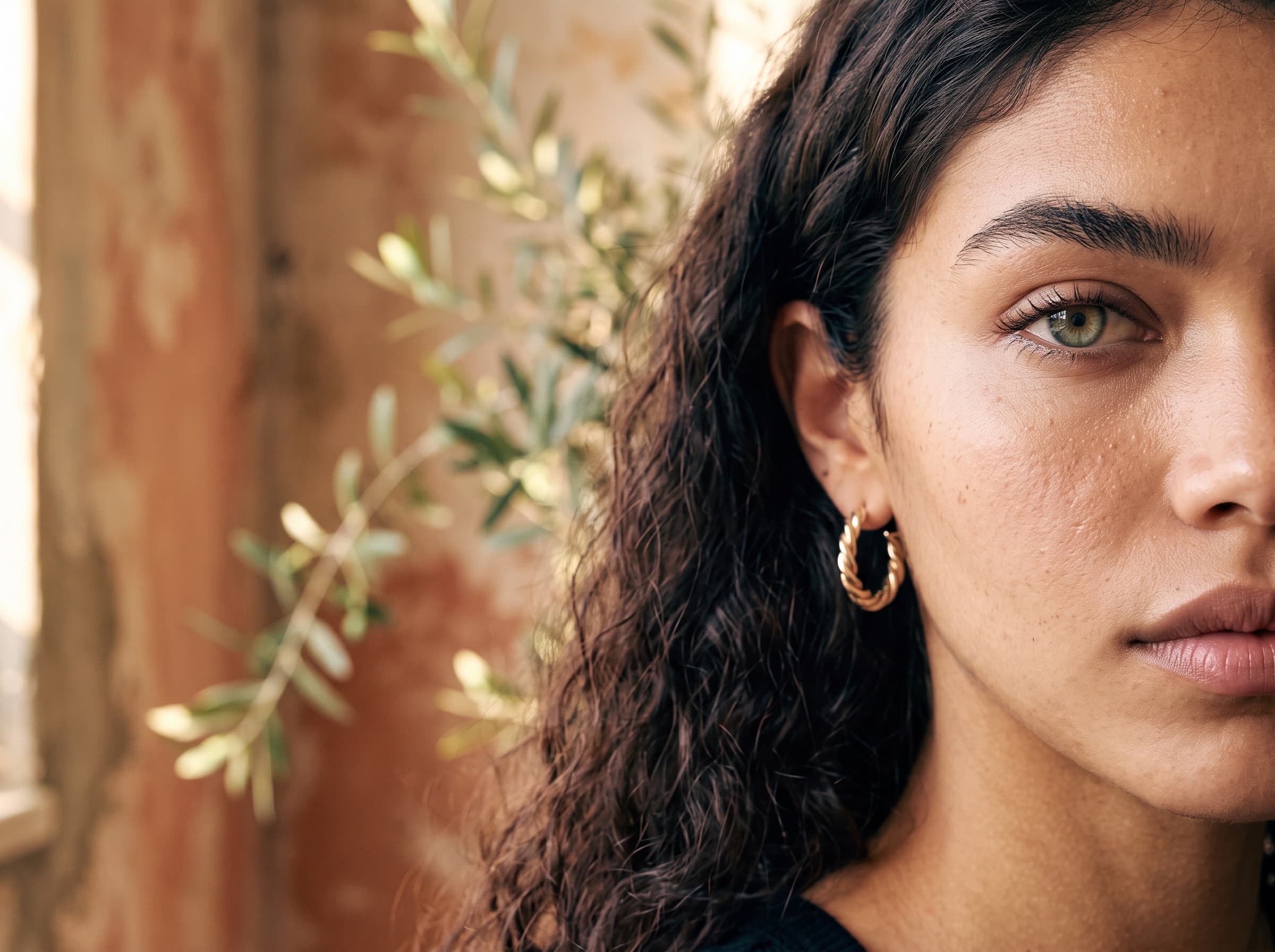
The identity is generated from text alone, then checked three ways before it is allowed to exist
The brief enters the pipeline as text and parameters. The underlying models are fine tuned on product imagery only, 3D renders, flat lays and still life. There is no real person training data anywhere in the pipeline.
Every candidate is then verified before it goes any further:
Against your own references. The candidate face is compared visually against every face in the moodboards and casting materials you supplied. If it resembles one of them, it is rejected.
Against our catalogue. The candidate is checked for similarity against every identity Sartiq has already produced, so two brands never end up sharing a face.
Against the internet. The portrait is run through reverse image search on Google, Bing and Yandex. If a real person surfaces who looks like the candidate, the identity is rejected and regenerated.
No exceptions and no overrides. A candidate that fails any of the three does not proceed.
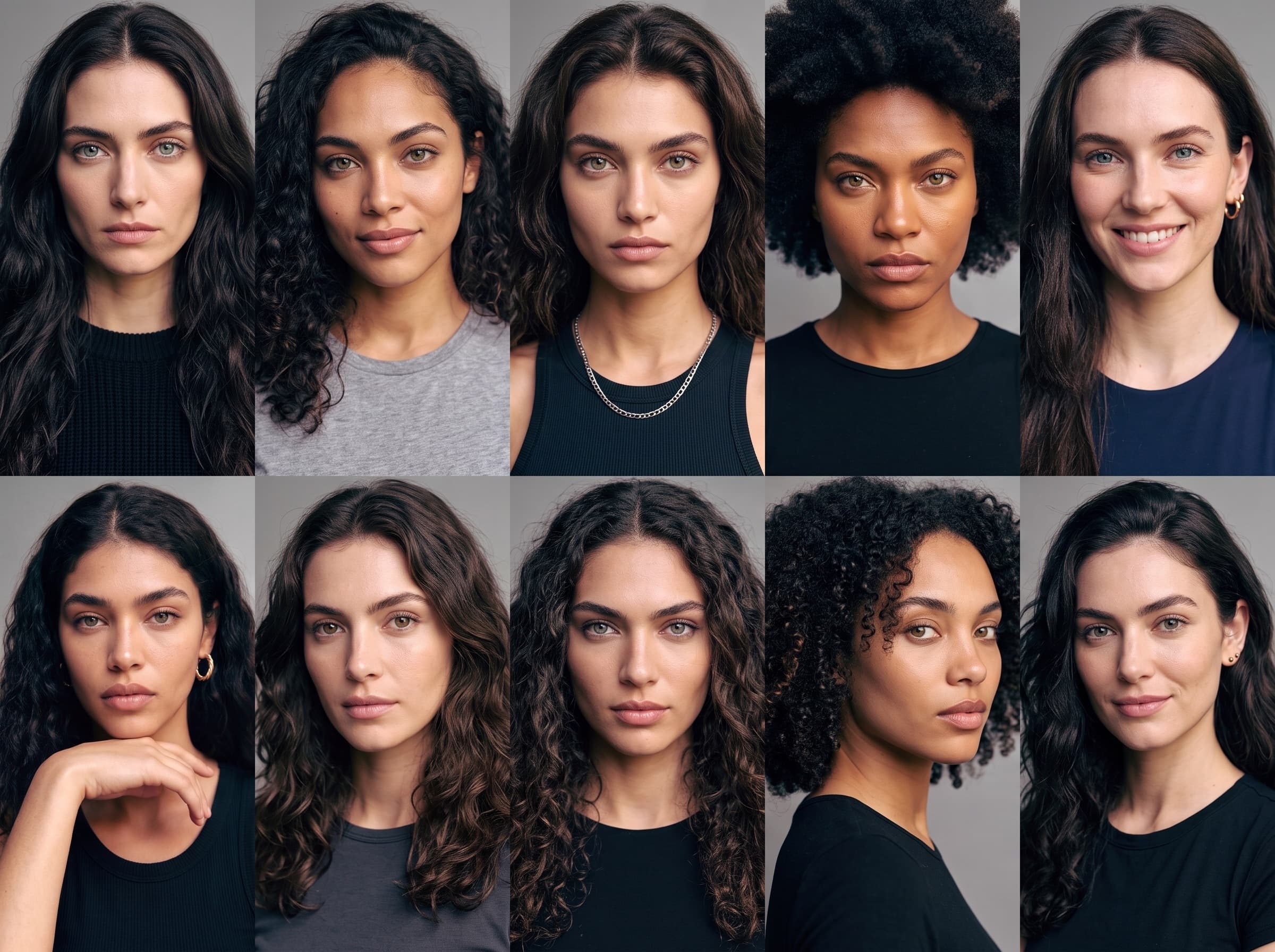
Commissioning one: brief, exploration, choice, refinement, approval
Brief. Before anything starts you provide a moodboard with at least five high resolution references, plus gender, age range, build, hair and skin tone. If one of these is missing the work does not begin, and we tell you which one. You can request a call to add anything else.
Exploration. Within one working day of a complete brief you receive ten candidate models, each with a portrait and a full length shot in basic garments. A second round of ten is included: tell us which of the first ten to work around, and you receive ten more within a working day.
Choice. You pick your candidate from the explorations.
Refinement. Five rounds are included. In each round you request one change and receive three versions within a working day. Choosing one of the three is included. A smaller nose and a heavier build are two changes, so they are two rounds, taken in sequence.
Approval. You approve the model and it enters your cast. Approval is nominal: the record shows who approved and when. Adding the model to a Location is completed within two working days of the request.

Every change is logged, and the identity ships with its paperwork
Refinements are recorded one trait at a time, with the operator who made the change and the named approver who signed it off, until the identity is locked.
At lock, the identity is delivered with an Identity Dossier: the references studied, the trait brief as written, the three verification results, the full iteration log, the named approvers on both sides, and the underlying models and data processors involved. It travels with the identity and is updated if the identity is ever refined.
The law does not require this. We produce it because the day a published image is questioned, a brand needs contemporaneous evidence rather than a reconstruction assembled after the fact.

Every output is marked, automatically
Every image leaving the pipeline carries machine readable provenance with no configuration on your side: C2PA Content Credentials, EXIF and XMP metadata, and an imperceptible watermark. Three layers, on every file, so the image can be identified as synthetic wherever it travels and whatever strips its metadata along the way.
That covers the marking duty at our end. The visible disclosure on your published pages remains yours, and we supply the technical means for it, including rendering a visible label directly onto delivered files before they reach your publishing pipeline.
The identity is not a person, and cannot become one
A recurring identity used across a campaign is a recurring identity, not a character with a life. It is never captioned as a real person, never given biographical detail, and never presented as an endorser making first person claims about a product.
That editorial discipline lives on your side, but you do not start from zero. The dossier is the documentary basis for the position that the face belongs to no one, verified against your own references, against our catalogue and against the open web, before a single garment was ever put on it.
Working with your systems
Built to sit inside the workflow you already run
Sartiq is API first in both directions. Products come in from wherever they already live, and finished images go out to wherever they need to be published.
Source in
- Flat lays
- Ghost mannequins
- 3D assets
- Product data
Your systems
PIM · DAM · storage
Sartiq
Production & approval
Approved out
- Approved images
- Your naming
- Your resolutions
- Your metadata
Before production
An open API brings source material into production: flat lays, ghost mannequins, 3D assets, product data, whatever your teams already produce. Your systems call ours, or we build the connection for you.
After production
An open API delivers finished images back into your publishing workflow, in your naming convention, at your resolutions, with your metadata, ready to go live without anyone renaming a file.
Custom connectors
Where a brand would rather not build against our API, we build against theirs. Custom connectors in both directions: one to gather source images from your systems before production, one to deliver approved images into your workflow after it. This is standard work for us, scoped per brand.
Why it matters at scale
Manual handling is where catalogue production quietly breaks. Files get renamed, versions diverge, someone copies the wrong folder before a drop.
Connected properly, product data flows in on its own schedule and approved images flow out to the channel that needs them, with no one moving files between systems.