



Why Sartiq

The evidence, the trade-offs, and the questions we get asked.

Case studies

What we produced for each brand, and what changed once the brand book became the production system.

StefanelOVSGuessGas JeansC.P. CompanyAltavia

Comparison

Three ways to produce a catalogue

Every brand producing at catalogue scale picks one of three routes. The trade offs are rarely stated out loud, so here they are, including where we lose.

  • A generic AI tool output

    Self-serve tools

    • Brand identityGeneric house style, drifts every generation
    • Consistency across SKUsBreaks down past a handful of items
    • Art directionNone. You are on your own
    • Post productionYours to do
    • RevisionsRegenerate and hope
    • Model identityShared library, used by everyone, no way to reserve one
    • Image rightsPlatform terms, revisable
    • Scale ceilingFalls apart above a few hundred images
    • Cost modelPer credit, unpredictable
  • A Sartiq PDP set

    Sartiq

    • Brand identityYour brand book, encoded and applied to every shot
    • Consistency across SKUsHolds across thousands of SKUs, every drop
    • Art directionYour creative direction, our execution, your approval
    • Post productionIncluded. Every image arrives publish ready
    • RevisionsUnlimited until the shot matches the brand book
    • Model identityYours to reuse every season, exclusive to you if you take it exclusively
    • Image rightsYours permanently, no conditions
    • Scale ceilingTens of thousands of images a year without quality drift
    • Cost modelPer approved image, fixed
  • A traditional agency campaign shot

    Traditional agency

    • Brand identityYour brand book, interpreted fresh by whoever is on set
    • Consistency across SKUsHolds within one shoot, drifts between shoots and seasons
    • Art directionTheir creative team, briefed by yours
    • Post productionIncluded, billed by the hour
    • RevisionsScheduled, quoted, and often a reshoot
    • Model identityLicensed by territory and duration, reshot when it lapses
    • Image rightsBounded by the licence term
    • Scale ceilingBounded by set days, crews and calendar
    • Cost modelDay rates, paid whether or not the day produces

Where the tools break

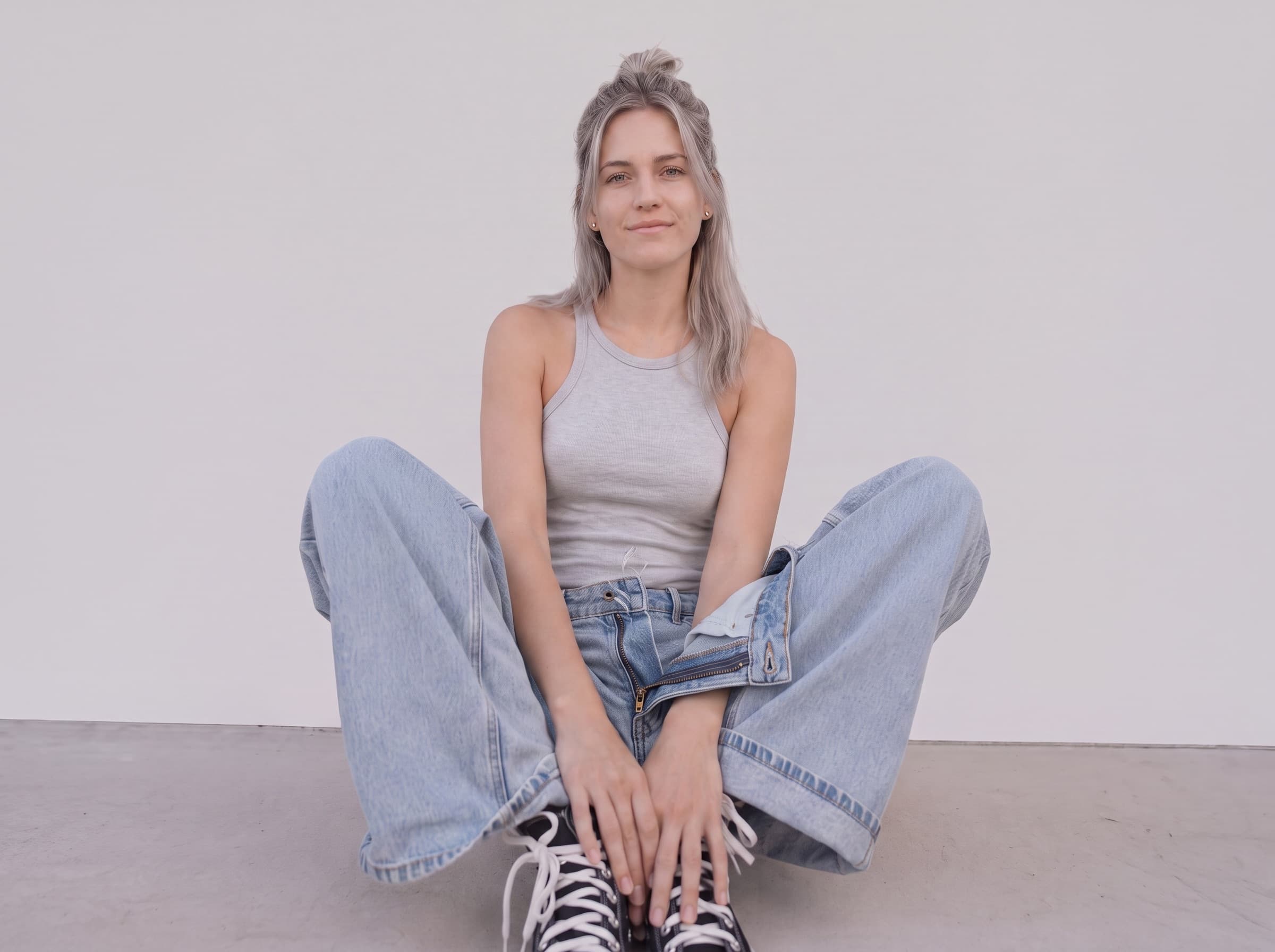
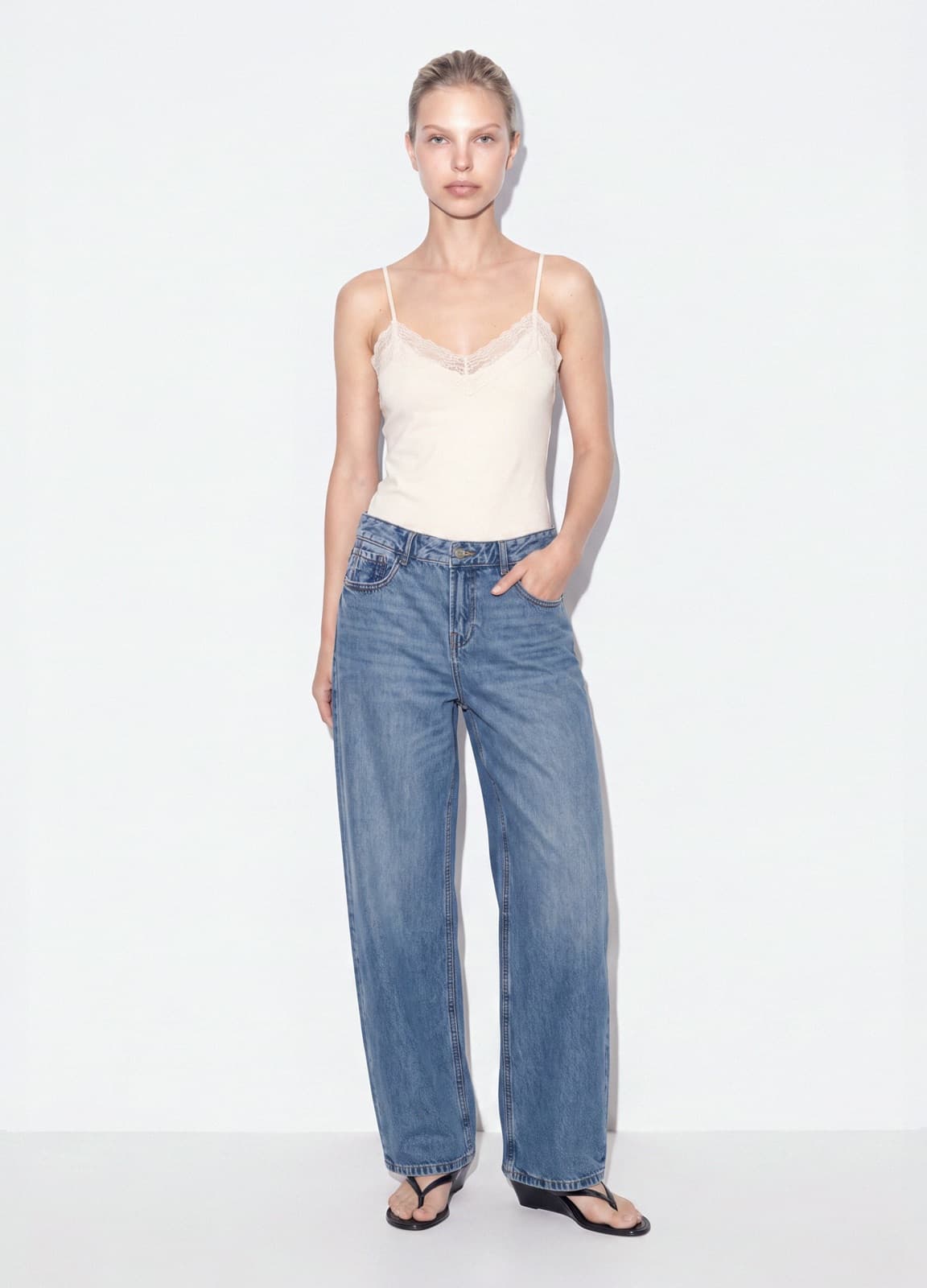
A model in a grey ribbed tank and light wash wide-leg jeans, seated against a plain studio wall

Generic AI produces roughly one usable shot in fifty. The rest arrive with an invented button, a missing logo, a distorted closure, or a colour that is close but wrong. At catalogue scale that is not a quality problem, it is a staffing problem, because someone has to review all fifty.

Worse, nothing connects one generation to the next. Two shots of the same garment produced a week apart will not match, and a product page assembled from them will not look like a product page.

Where the agencies are right

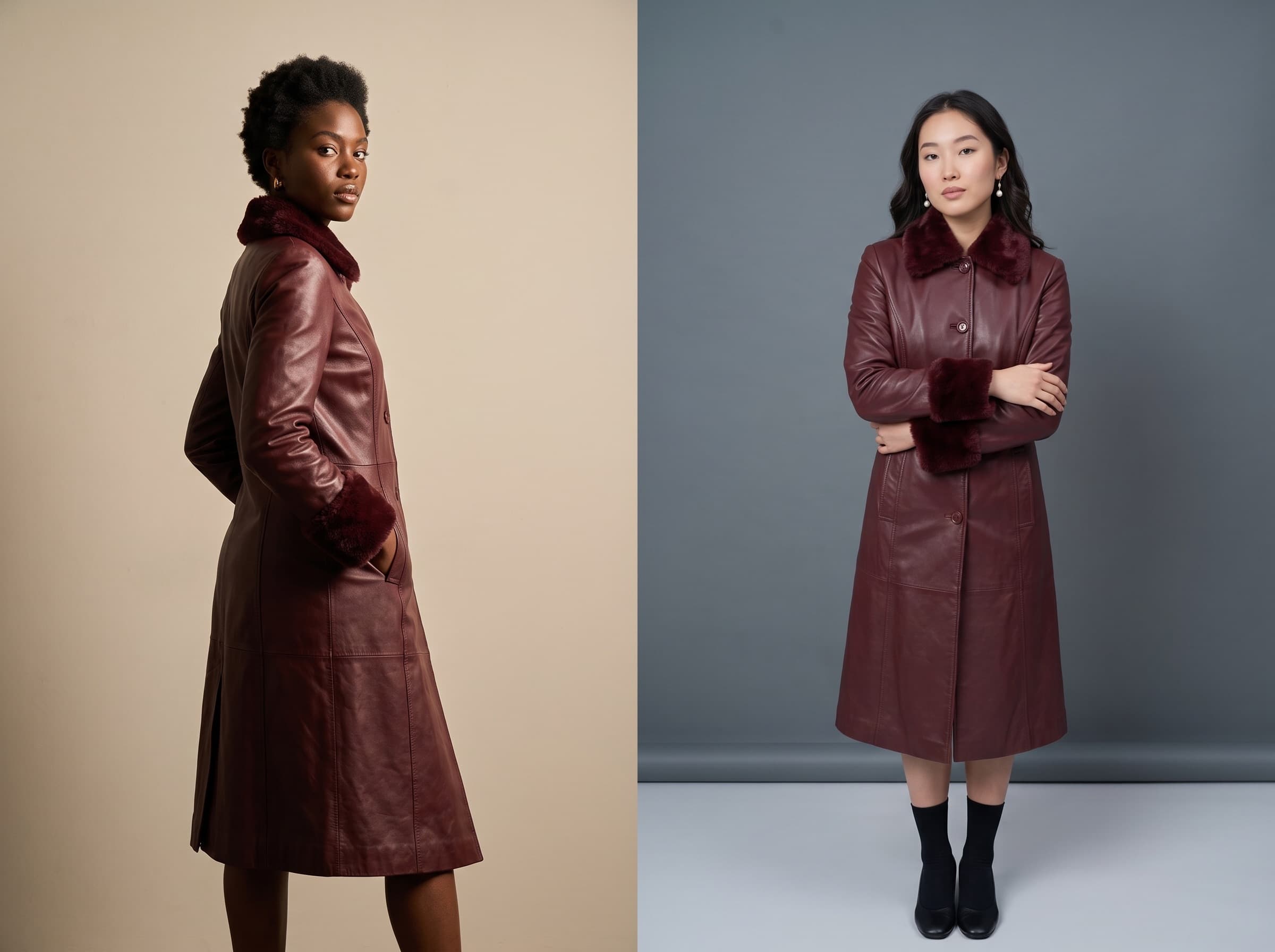
The same burgundy fur-trimmed leather coat on two models against different backdrops, shot in two separate sessions

A campaign with a named face, a location and a creative director on set is a creative problem, and it should be shot. We are not trying to replace it.

The catalogue underneath it is a different problem. Two thousand SKUs, four shots each, refreshed every drop, produced to a brand book that has to survive contact with three different crews and two different seasons. Agencies solve this by putting more people on it. That is why the identity drifts: consistency depends on who was on set that week.

What we do differently

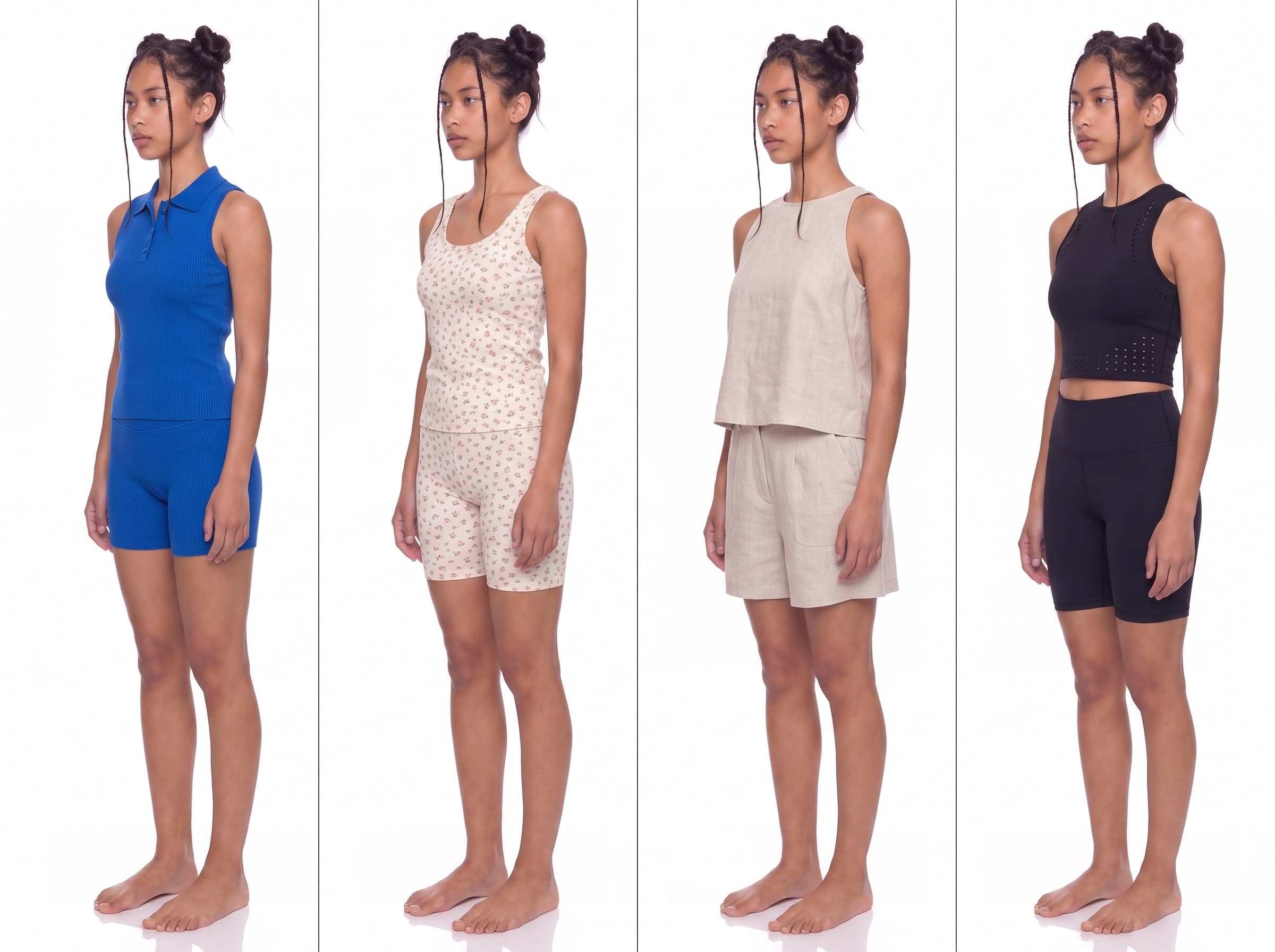
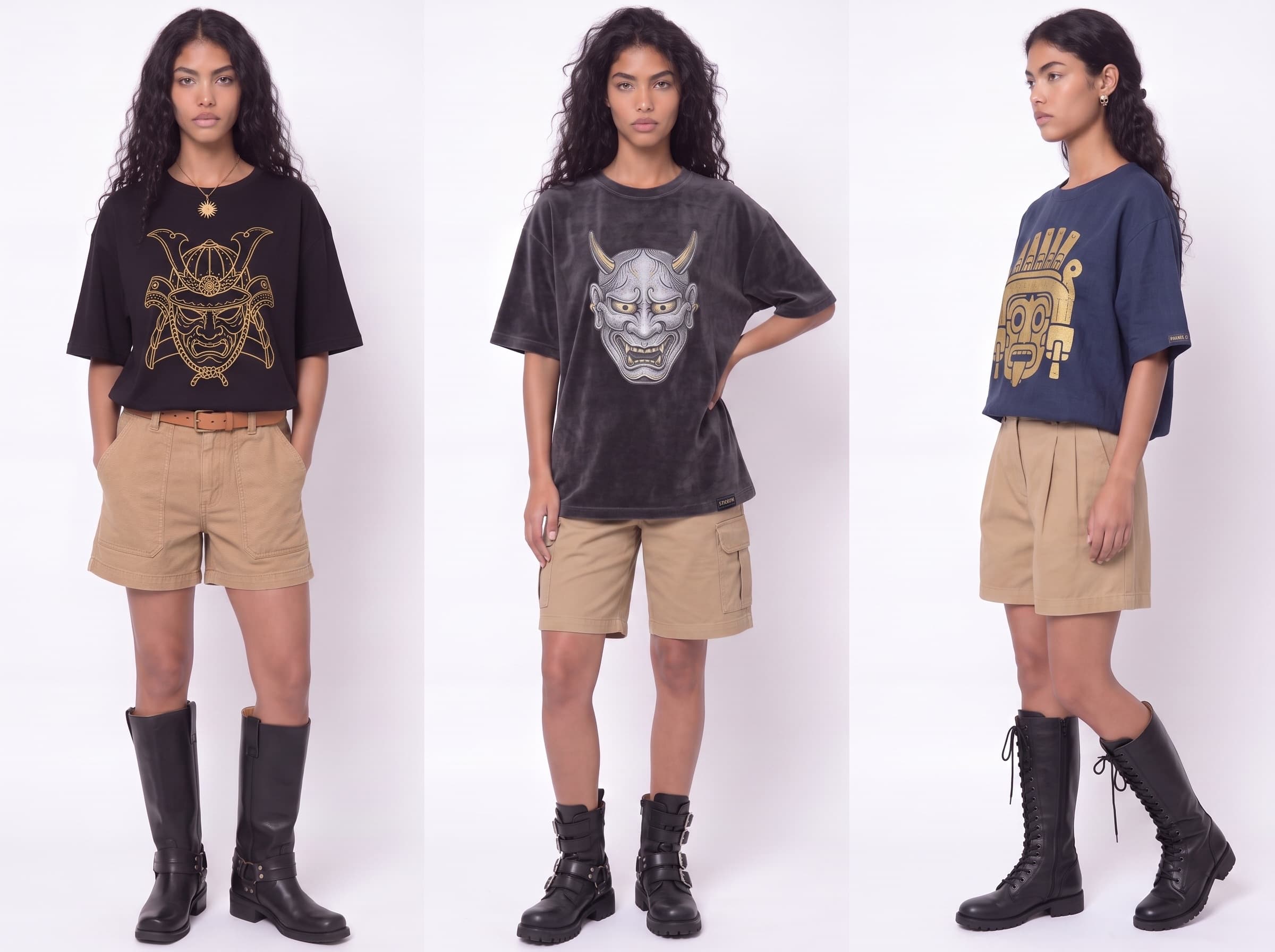
The same model produced across four looks with identical pose, framing and lighting, showing consistent treatment

Your brand book stops being a document and becomes the production system. Posing, styling, framing, lighting, casting rules, shot lists per category, margins per channel: configured once, applied to every image afterwards, and refined every time your team corrects something.

That is the part traditional production cannot buy at any price. Not because their people are worse, but because a document interpreted by humans on a set drifts, and a brand book encoded in a production system does not.

Where we lose

We will not shoot your campaign. We will not put a recognisable face on a billboard. If the shot needs a real person with a name attached, book a studio.

For the catalogue underneath, we hold your identity more consistently than any production process built on people and calendars.

FAQ

Questions we get asked

What Sartiq is, how quality and creative control work, how the models are built, who owns what, how we connect to your systems, and how it is priced.

What Sartiq is

  • What is Sartiq, exactly?

    A managed production studio. You send products, your team approves images, and finished files land in your systems ready to publish. We are not a tool you operate. There is no interface for your team to learn, no prompts to write, and nobody on your side spending a shift generating images.

  • Is this replacing our campaign shoots?

    No, and we would tell you if we thought otherwise. A campaign with a named face, a location and a creative director on set is a creative problem and it should be shot. We produce the catalogue underneath it: the thousands of SKUs, refreshed every drop, that have to look like your brand whether or not anyone senior is watching that week.

  • Who is this for?

    Brands producing at catalogue scale, roughly 500 SKUs a season and upward. Below that the economics of a managed studio do not make sense and a self serve tool will serve you better.

  • How much do you produce?

    Around 2,500 photographs go live every week across our clients. Our largest single client relationship covers twelve brands and more than eighteen product lines through one production system.

Quality and creative control

  • How do you stop the output looking generic?

    Your brand book becomes the production system. Posing, styling, framing, lighting, casting rules, shot lists per category, margins per channel: configured once and applied to every image afterwards. Generic output is what happens when a general purpose model is asked to invent a house style. Nothing here is invented. Every rule comes from your guidelines.

  • What happens when a shot is wrong?

    We fix it. Revisions continue until the shot matches your brand book, at no additional charge and with no cap on the number of attempts. You are buying approved images, not attempts at images, so a failed generation is our problem to absorb rather than yours to pay for.

  • Who does the retouching?

    We do. Every image arrives publish ready, not close to ready. Where automated production is weak, and it is weakest on small stitched detail like a woven logo, the image goes to a human retoucher before you ever see it. On our largest denim account that is roughly one image in four. We publish that number because a production partner claiming zero human involvement at this scale is not telling you the truth.

  • Does the quality drift across a big catalogue?

    That is the specific problem the system exists to solve. One client produces 30,000 images a year across four channels, including marketplaces where the image is the entire brand presence. Nobody reviews 30,000 images by hand for brand fidelity. Either the system holds the identity or the identity is gone.

  • What about difficult colours and fabrics?

    The colour pipeline works from photographs of the actual fabric, not from colour codes. On garment dyed pieces, where the finished garment is dyed after construction and no code describes it accurately, a Pantone reference is an approximation of something that was never uniform. A swatch photograph carries how the dye sits in the weave and how it shifts where light falls unevenly.

  • Does your team need us to write prompts?

    Nobody on your side writes a prompt. You send guidelines and products. You approve images. That is the whole interface.

Models

  • Are your models real people?

    No, and no photograph of a real person is ever uploaded, referenced or processed in creating one. Your reference material is read by a person, who writes a description from it in generic descriptors. That written description is the only thing that enters the generator.

  • How do you know the face is not somebody’s?

    Every candidate identity is checked three ways before it is allowed to exist: visually against every face in the references you supplied, against every identity we have already produced so no two brands share a face, and by reverse image search across Google, Bing and Yandex. Any match and the identity is rejected and regenerated. No overrides.

  • Can we have a model that is ours alone?

    Yes. Take the identity exclusively and it never enters our catalogue and is never used for any other brand, permanently, including after your contract ends. Without exclusivity you keep using it at no further cost, and so can others.

  • Can we control what the model looks like?

    You brief it the way you would brief a casting director: gender, age range, build, hair, skin tone, plus a moodboard of references. You receive ten candidates, then a second round of ten around the ones you liked, then five rounds of refinement, one change at a time with three versions returned on each. If the face works but the body does not, that is a refinement, not a restart.

  • Will the same model be available next season?

    Always. That is the practical advantage that gets underrated. A real model books out, ages, changes contract, or is unavailable the week your drop needs shooting. Your identity is never unavailable and returns unchanged.

  • Can we use a real person?

    A digital twin of a real person is possible under a dedicated contract, with that person’s consent handled properly. It is a different product from a virtual identity and it is priced and papered separately.

Rights and ownership

  • Do we own the photographs?

    Yes. Every approved photograph is yours permanently. No conditions, no usage window, no territory limit, no channel restriction, no expiry, and no obligation to credit us. If you stop working with us tomorrow, every image we ever delivered stays yours.

    This is worth checking carefully against anyone else you are evaluating. It is common in this category for the provider to retain ownership of the output and grant you a right to use it. We do not do that.

  • Do we own the model identity?

    The model stays configured inside our studio, in the same way the lights and the backdrops do. What you buy is the right to use it, exclusively if you take exclusivity.

    This is deliberate rather than a restriction dressed up as one. The identity holds together across seasons because it lives in one place, under one set of rules, with one provenance record behind it. An identity handed over as a file drifts the moment it is edited somewhere else, and a provenance chain that ends at export is not a provenance chain.

  • Can we publish on Amazon, Zalando and other marketplaces?

    Yes, on any channel. Each marketplace sets its own technical and editorial standards, and those are configured per destination so the same approved shot exports with the right crop, margins, resolution, naming convention and metadata for each one.

  • What if somebody claims one of your models looks like them?

    That is our liability, not yours. Indemnity is written into the contract, and behind it sits the Identity Dossier for that identity: the references studied, the brief as written, the three verification results, the iteration log and the named approvers on both sides. An indemnity is only worth what the record behind it is worth.

Working with your systems

  • Do you integrate with our PIM and DAM?

    Yes, in both directions, and it is live rather than planned. An open API brings source material in: flat lays, ghost mannequins, 3D assets, product data. An open API delivers approved images back out in your naming convention, at your resolutions, with your metadata. Where a brand would rather not build against our API, we build against theirs.

  • Does anyone have to move files by hand?

    No. On our largest account we connect nightly and pull new products, so the production queue loads without anyone copying files or renaming folders. Manual handling is where catalogue production quietly breaks: files get renamed, versions diverge, someone copies the wrong folder before a drop.

  • What input do you need from us?

    Basic product imagery is enough. A hanger shot, a flat lay, a ghost mannequin, a 3D render. The garment needs to be clearly visible with fabric, colour and silhouette recognisable. Better input produces better output, but you do not need a production facility to give us something usable.

  • How do we start?

    A test shooting, free, before any contract. You send guidelines, file specifications and a representative sample of products, we configure the production system around your brand, and then we produce your garments the way they would be produced in month six. Your creative team either signs it off or tells us what is wrong.

    Send the difficult products, not the best ones. The fabrics that never photograph right and the categories your current production handles worst are the only ones the test proves anything about.

  • Do we have to ship you samples?

    No. The photographs you already have are enough: flat lays, hanger shots, ghost mannequins, 3D assets. Nothing leaves your warehouse. If you would rather send physical products we can work that way, but it is not a requirement, and sample logistics are usually the slowest part of anyone else’s process.

  • What are we actually judging?

    Two things. Whether the output is indistinguishable from your current production, which is what a single sample can show. And whether the same garment produced twice, weeks apart, still matches, which is what a single sample can never show and what decides whether a catalogue holds together.

  • What happens after launch?

    A named account contact, and KPIs tracked per drop: approval cycle time, technical acceptance rate, manual corrections. Reviewed each quarter, with workflow changes made against the numbers rather than against opinions.

Compliance and security

  • Are the images labelled as AI generated?

    Every output carries three marking layers applied automatically: C2PA Content Credentials, EXIF and XMP metadata, and an imperceptible watermark. Three layers because any one of them can be stripped in a publishing pipeline and the image needs to stay identifiable anyway.

  • Who is responsible for the visible disclosure?

    The visible label on your published page is your duty as the publisher, not ours as the producer. We do not leave you to solve it alone. We supply the technical means, including rendering a visible label directly onto delivered files before they reach your pipeline, toggled per channel.

  • What is your position under the EU AI Act?

    Limited Risk under Article 50, with the analysis available to your counsel. The obligations are transparency obligations, and we meet the producer side of them now rather than when the requirements are finalised. There is nothing here waiting on further guidance.

  • Do you train on our product images?

    No. What the production system learns from your brand book stays with your brand book. There is no cross brand training, and client data is segregated per brand.

  • Where is our data held?

    In the EU throughout. GDPR compliant hosting and operations, per brand tenant isolation with role based access control, separate testing, staging and production environments, encryption at rest and in transit, database snapshots every three hours. ISO 27001 and SOC 2 Type II are maintained at infrastructure provider level. We complete security questionnaires and support vendor assessments as standard.

  • Can we see who approved what?

    Yes. The approval registry records who approved which image and when, and every output retains an exportable provenance trail: prompt, parameters, model version, signing chain and revision ID.

Commercial

  • How is this priced?

    Per approved image, fixed, under a contract. Not credits, and not per generation. You are not charged for attempts, revisions or failed outputs, which means the cost of an image does not depend on how many tries it took to get it right.

  • Is there a subscription?

    No. Volumes are agreed per contract and priced against what you actually produce.

  • What is not included?

    Creating a virtual model of your own is priced separately, as is taking that model exclusively. Everything about using models from our existing catalogue, choosing which to use, and reusing them season after season, is included in the photography.

  • Can we try before committing?

    The test shooting exists for exactly that. Three of your products, produced properly, so you are judging finished work on your own garments rather than a demo on somebody else’s.

  • Who do we talk to?

    Request a test shooting and we will scope it against your catalogue.

Ready to transform your imagery?

Fill the form to plan a shooting and see Sartiq work on your products: